
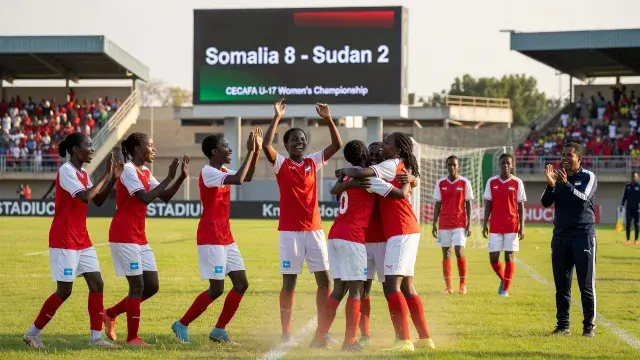
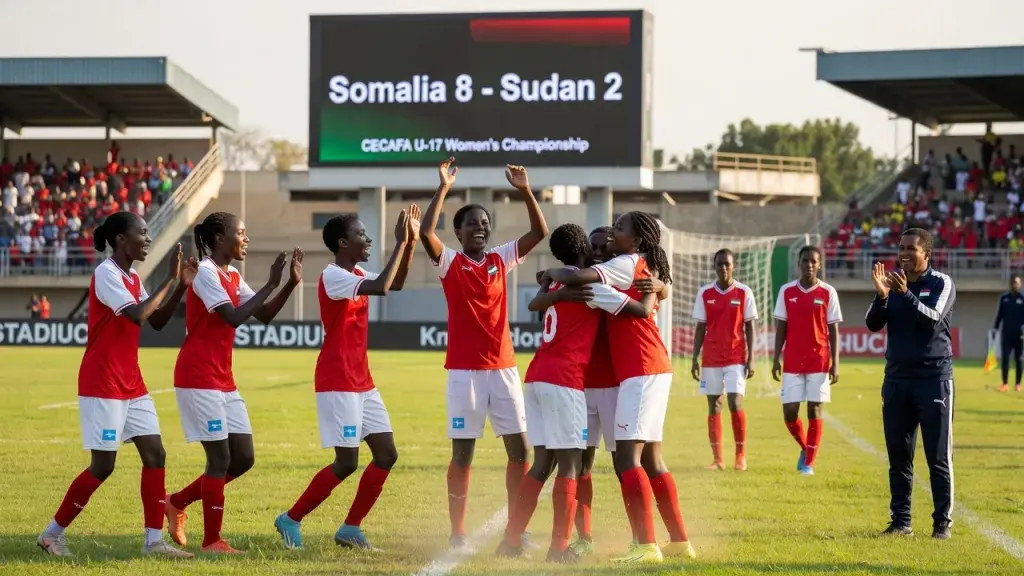
Somalia's women's football programme reached a landmark moment on Wednesday when their Under-17 side defeated Sudan 8-2 in a Group A match of the CECAFA U-17 Women's Championship at the KMC Stadium in Dar es Salaam, Tanzania. It was the first international victory in the history of Somali women's football - a result that carries significance far beyond the scoreline. The win came in the final group game of the tournament, closing a difficult but formative week for a nation still building the foundations of its women's game.
Somalia had entered the regional competition already carrying two heavy defeats - a 4-0 loss to hosts Tanzania in their opener and a 6-0 reverse against Kenya in their second match - and the gap between Somalia and the more established sides in the region was plain to see. Women's football development across East Africa moves at varying speeds, shaped by infrastructure, federation investment and cultural context, much like the way niche sports gain traction in different markets globally; fans following disciplines far outside football's orbit, for instance checking skeleton olympics odds, understand how competitive hierarchies are built gradually through participation and exposure. For Somalia, this tournament was exactly that kind of beginning - structured exposure to international competition against regional peers, regardless of the results along the way.
Against Sudan - also making their debut in the CECAFA U-17 Women's Championship - Somalia produced a performance of remarkable conviction. Nagma Mohamed led the charge with a hat-trick and was voted player of the match, while Sundus Mohamed added a brace. Hibo Salad, Halimo Isse and Maryan Osoble also found the net, combining to make it a comprehensive and commanding display. Sudan pulled two goals back through Nashwa Abbas and Fatin Fadol, but there was no way back from the deficit Somalia had built. Eight goals in a single international fixture, for a team recording their first-ever win, is a statement of the talent present in this young squad.
Players and Coach Reflect on a Milestone Moment
Hat-trick hero Nagma Mohamed did not shy away from the emotion of the occasion. "I am very happy that I scored three goals today. This will motivate me to keep working hard," she said after the final whistle, her words reflecting both personal ambition and the collective spirit that carried the team through a tournament that began with adversity. Head coach Maha Mohamed Hagi struck a similarly measured and forward-looking tone, framing the tournament as part of a longer developmental journey. "We came for this tournament to learn and I am glad we have also collected a win. We shall keep improving as we participate in many more tournaments," the coach said. That perspective - valuing the process over the immediate result - is precisely the mindset that young programmes need to sustain momentum beyond a single breakthrough result.
What This Means for Women's Football in Somalia
The significance of Wednesday's result is hard to overstate when viewed through the lens of what women's football has historically faced in Somalia. The country has experienced decades of conflict and instability that have severely limited sporting infrastructure, and women's sport in particular has had to navigate additional social and institutional barriers. The emergence of a competitive Under-17 women's side willing to travel for a regional tournament and return with a historic victory is, in that context, a genuine marker of progress. CECAFA tournaments - the Council for East and Central Africa Football Associations - serve as critical competitive platforms for national teams at various levels, giving younger footballing nations the match experience needed to grow. Somalia's participation alone was already a step forward; the win against Sudan now gives the programme a story to rally around.
The Road Ahead for Somali Women's Football
The broader challenge now is ensuring that this moment becomes a catalyst rather than a footnote. Women's football across the African continent has been growing steadily, with CECAFA member nations increasingly investing in youth development pathways. Tanzania, who beat Somalia 4-0 in the opening match, and Kenya, who won 6-0, represent the kind of competitive benchmark that Somalia should be measuring themselves against in the years ahead. The quality of the players who stepped up against Sudan - particularly in front of goal - suggests there is genuine talent within this generation worth nurturing. Federation support, consistent domestic competition and continued international exposure will determine whether the 8-2 victory against Sudan is remembered as a spark or simply a result. If Somali football administrators take the right lessons from this week in Dar es Salaam, it should be the former.


