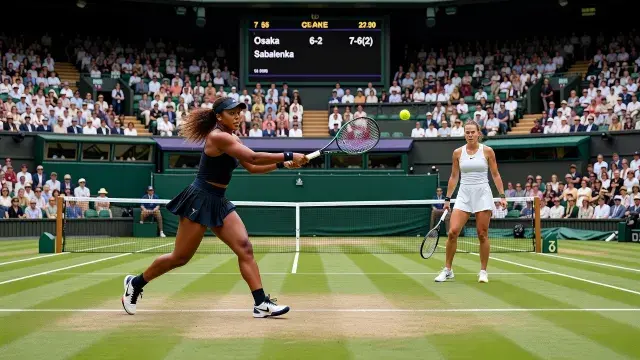
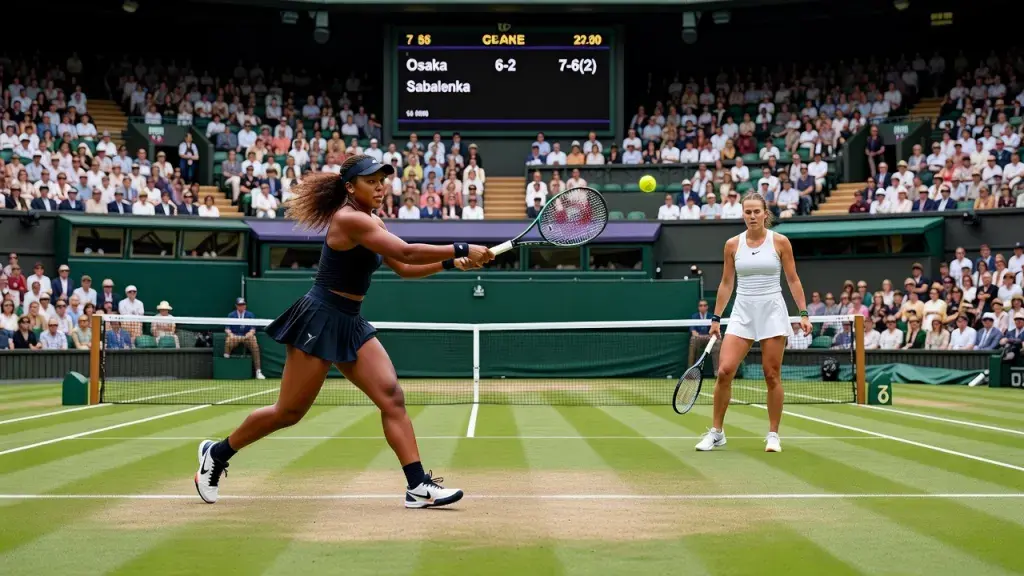
Naomi Osaka produced one of the most compelling performances of her comeback at Wimbledon, defeating world number one Aryna Sabalenka 6-2, 7-6(2) in the fourth round on Centre Court. The result is a significant statement from Osaka, who has battled injury and personal challenges to return to the sport's biggest stages, and it inflicts another painful chapter on Sabalenka's complicated relationship with the grass-court Grand Slam.
The manner of the defeat will sting as much as the scoreline. Sabalenka, who has established herself as the dominant force in women's tennis over recent seasons, looked visibly uncomfortable and increasingly frustrated as Osaka's aggressive, flat ball-striking disrupted her usual rhythm. In a broader sporting week full of high-profile storylines - from football transfers to discussions around koke atlanta united mls transfer - Osaka's win stood out as a genuine shock result, the kind that reminds sport of its capacity to surprise regardless of rankings and expectations. The Belarusian, so commanding on hard courts, never found her footing on the Wimbledon surface and was ultimately outplayed in both halves of the match.
Osaka's Aggression Proved the Decisive Factor
From the opening games, Osaka made her intentions clear. She attacked the second serve relentlessly, took time away from Sabalenka by moving into the court early, and served with a level of precision that gave the world number one little opportunity to dictate. The first set was over in clinical fashion, with Sabalenka struggling to impose herself as errors mounted and Osaka's confidence visibly grew with each held service game.
The second set was more competitive, but Osaka held firm in the tiebreak, racing to a 7-2 victory in it to seal the match. For Sabalenka, who was broken at crucial moments and unable to convert the pressure she occasionally generated, it was a lesson in the unpredictability that grass courts introduce even to the best players in the world.
Sabalenka Speaks Candidly About Emotional Struggle
In the post-match press conference, Sabalenka did not shy away from the depth of her frustration. The 26-year-old acknowledged that she is finding it difficult to take joy from her tennis at this point in the season, a candid admission that speaks to the mental weight of sustaining elite performance over a full Grand Slam calendar. Despite holding the world number one ranking, Sabalenka noted that her 2025 Grand Slam results have not reflected the standard she demands of herself, and she suggested she would take time away from the tour to reset before returning with renewed purpose.
That honesty, while uncomfortable for a player still at the summit of the rankings, is also a measure of self-awareness. Sabalenka has spoken openly about mental health and emotional challenges in tennis before, and her willingness to confront those difficulties in public reflects a level of maturity that goes beyond match results.
A Wimbledon Title Remains Out of Reach - For Now
Sabalenka has yet to win at Wimbledon, a gap in an otherwise formidable Grand Slam record that continues to grow more prominent. Her Australian Open titles and consistent hard-court dominance confirm her status as one of the generation's best players, but the grass remains a surface where her game faces its most searching examination. The defeat to Osaka prolongs that wait for another year at least.
For Osaka, the win is a significant milestone in a comeback that has not been without setbacks. Reaching the Wimbledon quarter-finals from this position carries genuine weight, and her performance against the top-ranked player in the world will only strengthen the belief that she is capable of competing for major titles again. The story is far from over for either player - but at Wimbledon 2025, it was Osaka who wrote the better chapter.