
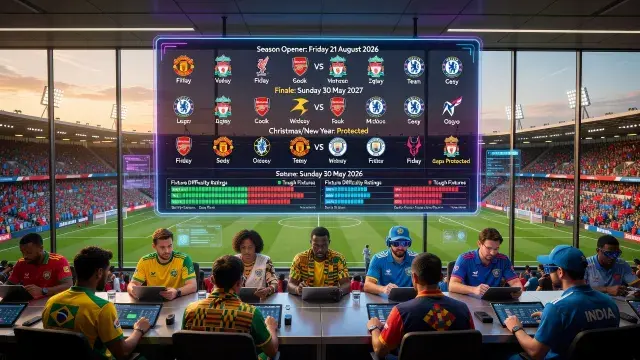
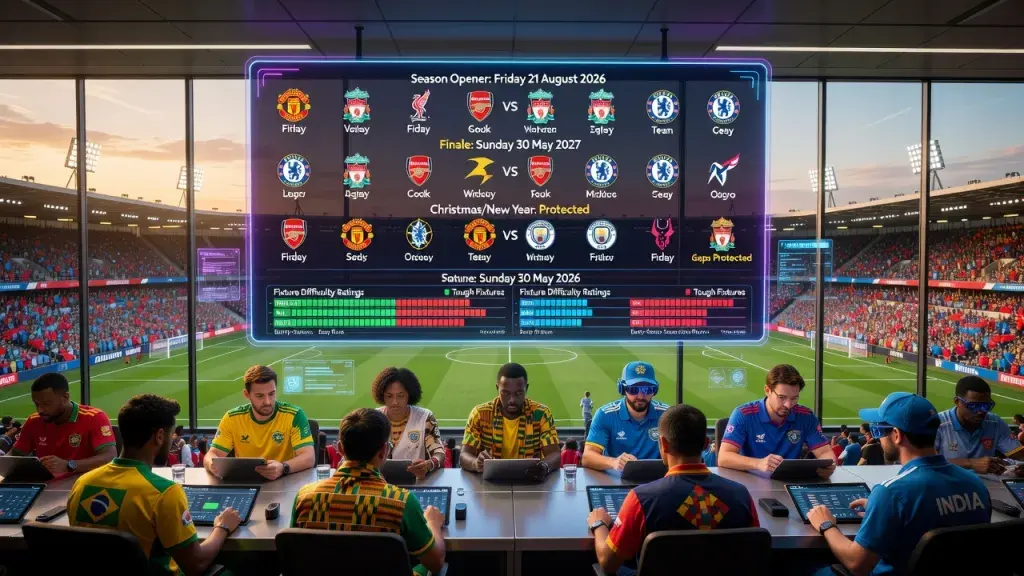
The Premier League has published the complete fixture schedule for the 2026/27 season, with all 380 matches now visible to clubs, supporters, and managers alike. The full list is available on premierleague.com and the official Premier League app, giving fans their first clear look at the shape of the campaign ahead. The season opens on Friday, 21 August 2026, and concludes on Sunday, 30 May 2027.
This year's campaign begins one week later than the 2025/26 season, a deliberate decision rooted in player welfare. The delayed start guarantees 88 clear days between the end of the current season and the beginning of the next, and crucially, 32 days of recovery time from the FIFA World Cup 2026 final. For those keeping an eye on other sports during the summer window, much as fans track online biathlon odds during the off-season, the Premier League's scheduling decisions are being watched closely by clubs managing players returning from a physically demanding World Cup tournament. The final day of the season is set one week before the UEFA Champions League Final on Saturday, 5 June 2027, preserving the integrity of both competitions' climaxes.
The 2026/27 campaign will be structured across 33 weekends and five midweek match rounds - a framework designed to manage the increasingly congested global football calendar. One of the more significant scheduling commitments concerns the festive period: the Premier League has confirmed that no two match rounds over Christmas and New Year will take place within 60 hours of each other. This protection, agreed with the clubs, directly addresses long-standing concerns from players and managers about the physical toll of fixture congestion during the holiday stretch, a concern that has only grown louder since the expansion of the international calendar.
A Process Six Months in the Making
Behind the clean rows of dates and opponents lies an extraordinary logistical undertaking. Producing the full fixture list is the result of a process that spans almost half a year and involves the coordination of 2,036 matches across the top four divisions of English football. Constraints ranging from stadium availability and local derbies to broadcast windows, European commitments, and international breaks must all be accommodated simultaneously. The result - 380 Premier League fixtures slotted into a coherent, workable calendar - is far less straightforward than it appears on any given Saturday afternoon.
Fantasy Premier League Managers Get Their Early Advantage
Fixture Release Day carries particular significance for the millions of Fantasy Premier League participants around the world, including a rapidly growing fanbase across Brazil, Africa, and India where engagement with the Premier League - and with FPL specifically - has surged in recent years. Although the official 2026/27 FPL game will be launched later in the summer, the Scout has already begun analysing the fixture list to identify which players offer the strongest early-season returns.
Alongside that analysis, the 2026/27 Fixture Difficulty Ratings have been published, giving FPL managers a structured tool to assess which clubs face favourable runs of matches in the opening gameweeks and which face a punishing early schedule. Experienced FPL players know that getting those first few gameweeks right - targeting assets with easy fixtures and avoiding sides facing tough tests - can define a season's standing before it has barely begun.
What the Calendar Means for the Title Race
For clubs themselves, the fixture list is the first strategic document of the new season. Managers and their backroom staff will have already begun identifying key clusters - back-to-back home games, difficult away runs, fixture congestion around European nights - and planning squad rotation accordingly. The compressed final stretch of the season, ending a full week before the Champions League Final, adds an element of clarity to a calendar that, in recent years, has felt increasingly strained at its edges. Whether that breathing room translates into more compelling football, fewer injuries, or a more open title race remains to be seen when the first ball is kicked on 21 August.


